Audiobooks for older readers
When the print has got too small or holding a hardback has got difficult, audio is the obvious answer. The hard part is not the books — it is getting them onto something that is genuinely easy to use.
Advertising disclosure · we are paid for this
New customers only. 30 days free, then it renews automatically at the monthly rate shown at signup unless you cancel first. Terms verified 17 September 2026.
Free trial for eligible customers. Amazon shows the length and the price on the signup page, and the trial converts to a paid month automatically unless you cancel. Terms verified 14 September 2026.
#ad · The link goes straight to Audible's own free-trial signup page and Amazon's Kindle Unlimited signup page, and we are paid a flat fee if you start a qualifying trial there. It costs you nothing extra and it does not change what we conclude on this page. Full disclosure.
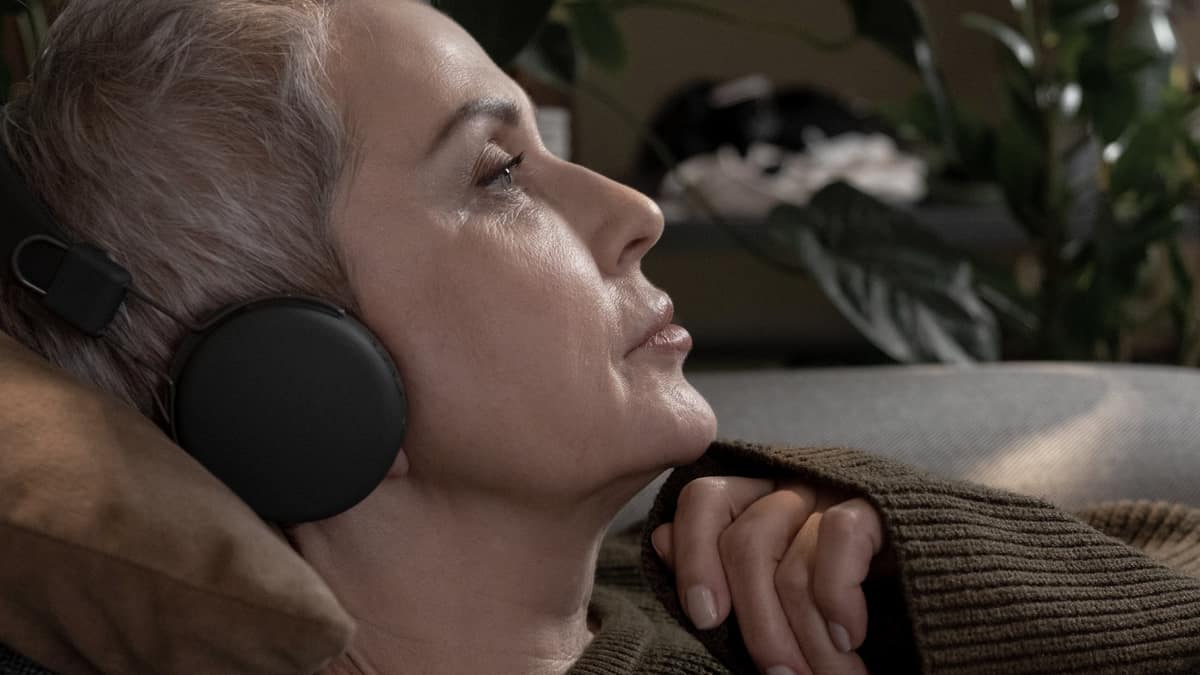
The reason people go looking for this is usually specific and recent: the print in paperbacks has become tiring, a hardback has become awkward to hold for an hour, or an eye condition has made an evening of reading into work. Audio solves all three completely. What it introduces instead is a technology problem, and that is where most attempts fall over.
Start with the device, not the subscription
Every failed attempt at this has the same shape: somebody buys a subscription, installs an app on a phone, shows the recipient once, and the whole thing is never opened again. The obstacle was never the books. It was a small screen, a password, a battery and an interface designed for somebody who already knows what it does.
In rough order of how little there is to learn:
- A smart speaker. You say what you want and it plays. No screen, no charging, no unlocking, and the volume control is a physical thing on top. Audible works on Alexa devices, with one account condition that causes nearly every “it cannot find my books” problem — Audible on Alexa and Echo explains it.
- A tablet rather than a phone. Same app, bigger targets. If a phone is already in daily use this is a downgrade in convenience but an upgrade in usability, and for many people that is the right trade.
- An e-reader with audio support. Useful for somebody who wants to move between reading at a large font size and listening, which is a very common pattern as eyesight changes.
Whichever it is, set it up once, completely, with the account signed in and one book already downloaded. A device handed over ready to press play gets used. A device handed over with a login screen does not. Audible devices and apps covers what runs where.
When hearing is the difficulty, not sight
This is the half of the question that gets skipped, and the advice is nearly the opposite of the usual audiobook advice. Production values that sound impressive — full casts, scored music, atmospheric sound design — make a recording harder to follow, not easier, for a listener whose hearing has changed. Competing sound is competing sound.
What helps, in order: a single narrator; an unhurried delivery; straightforward production with no music underneath; and playback slowed below normal speed. That last one is free and badly underexploited — every app can do it, and dropping to 0.8 or 0.9 buys real comprehension at the cost of a slightly longer book. Audiobook playback speed covers the mechanics, and choosing a narrator covers using the free sample, which is the only reliable test.
Wired headphones are worth a mention because they solve two problems at once: they remove room noise entirely and they have no pairing step to go wrong. Bluetooth is a convenience that costs a troubleshooting-support call about once a month.
The free route, which most people should try first
Public libraries lend digital audiobooks at no cost, and the sentence on Libby's own help page is the whole pitch: “With Libby, you can enjoy free ebooks, digital audiobooks, and magazines from your library. All you need is a library card.” Loans download automatically for offline use and return themselves on their due date, which removes the two things that most often go wrong.
There is a second reason this route suits older readers specifically: libraries staff a desk. A great many public libraries will sit down with somebody and set the app up on their own device, which is a level of support no subscription service offers at any price. It is worth a phone call before it is worth a credit card. Borrowing from your library walks through it, and we earn nothing when that is the answer.
On discounts, honestly
There is no senior rate on Audible or Kindle Unlimited published anywhere we can read, and we are not going to repeat one from a site that does not cite a source. There is a real discount adjacent to this, though, and it is one older readers on fixed incomes are disproportionately likely to qualify for: Amazon's Prime Access rate for people receiving qualifying government assistance, which Amazon's own list includes SSI, SSDI and Medicaid on. The discounts page has the full list and the figures with the date we read them.
Choosing books that work in audio at this stage
Two practical filters, neither of which is about taste. The first is cast size: a novel with forty named characters and three timelines is demanding in audio for anybody and considerably more so if attention tires. A linear story with a small cast is easier to hold.
The second is familiarity. Re-listening to a book somebody already knows and loves is not a lesser experience; it removes the work of tracking a new plot and leaves the pleasure of the prose and the voice. It is also the single best first choice for anybody unsure whether they will get on with audio at all, because if a favourite novel does not work in audio then the format is the problem rather than the book.
Length is the third thing to check and the easiest to get wrong. The arithmetic is on how long audiobooks actually take, and it is worth doing before committing to something that runs thirty hours.
Where this sits alongside accessibility
Everything above assumes ordinary age-related change rather than a diagnosed print disability. If it is the latter, there are dedicated services that are free to qualifying readers and materially better than any commercial subscription for the purpose. Audiobooks and accessibility covers those routes, and they should be checked before anybody pays a monthly fee.
If a paid service is the right answer after all that, the sensible order is still the cheap one: use the free trial deliberately, with the setup done by somebody confident and the cancellation date in a calendar. You can start a free Audible trial — 30 days for new customers, renewing automatically unless it is cancelled first — and find out for nothing whether the habit takes.
Advertising disclosure · we are paid for this
We get a flat fee if you start a qualifying trial through this link. It costs you nothing extra, it does not change what we conclude on this page, and the full disclosure is here.
Testing it before committing
One month is enough to learn whether the device works, whether the narration is comfortable and whether the habit sticks. Those are the three unknowns, and none of them is answerable from a catalog. Terms, and the date we checked them, are on our Audible free trial page.
New customers only. 30 days free, then it renews automatically at the monthly rate shown at signup unless you cancel first. Terms verified 17 September 2026.
#ad · The button goes straight to Audible's own free-trial signup page. The offer you see there is whatever Audible is running at the moment you click, which is why we send you to look rather than printing a number that could be out of date. What we checked, and when, is on how we research.
Common questions
What is the easiest way for an older person to listen to audiobooks?
Is there a senior discount on Audible?
Are audiobooks good when eyesight is failing?
What if hearing is the difficulty rather than sight?
Can audiobooks be borrowed free?
Are audiobooks a good gift for a parent or grandparent?
Is a physical audiobook player worth buying?
Sources
Everything on this page that states a program term was checked against these pages on the review date above.
Advertising disclosure · we are paid for this
Ready to start a free trial?
New customers only. 30 days free, then it renews automatically at the monthly rate shown at signup unless you cancel first. Terms verified 17 September 2026.
Free trial for eligible customers. Amazon shows the length and the price on the signup page, and the trial converts to a paid month automatically unless you cancel. Terms verified 14 September 2026.
#ad · The link goes straight to Audible's own free-trial signup page and Amazon's Kindle Unlimited signup page, and we are paid a flat fee if you start a qualifying trial there. It costs you nothing extra and it does not change what we conclude on this page. Full disclosure.
Back to everything on Guides.