Where free audiobooks actually come from
There are three real sources and a lot of noise. None of the three pay us anything, which is why this page is worth reading.
Advertising disclosure · we are paid for this
New customers only. 30 days free, then it renews automatically at the monthly rate shown at signup unless you cancel first. Terms verified 17 September 2026.
#ad · The link goes straight to Audible's own free-trial signup page, and we are paid a flat fee if you start a qualifying trial there. It costs you nothing extra and it does not change what we conclude on this page. Full disclosure.
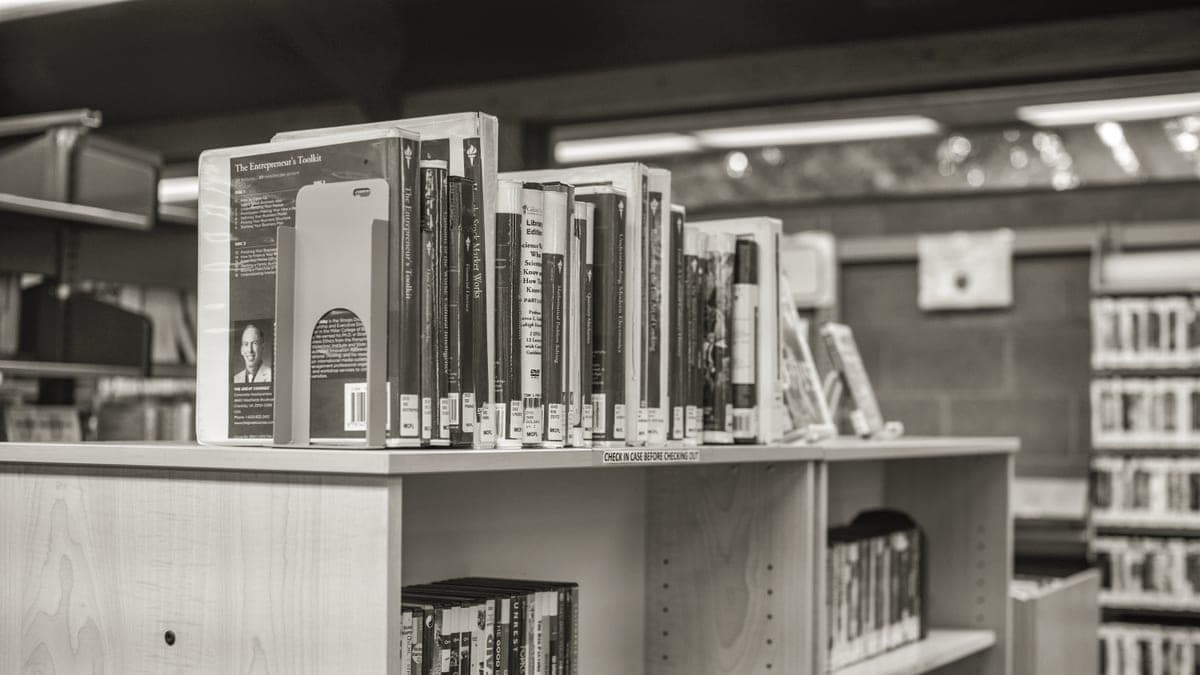
Search for free audiobooks and you will mostly find pages steering you into a paid trial. There are genuinely free routes, they are better than people expect, and two of the three pay this site nothing at all. Here they are in the order we would actually use them.
1. Your public library
The best answer, and the one most people skip. A large share of US public libraries lend audiobooks digitally through Libby. You sign in with a library card, borrow, listen, and the loan returns itself. There is nothing to pay and no subscription involved, and the catalog is strongest on exactly the traditionally published books that subscription catalogs handle worst.
The trade-off is real and worth stating: libraries license a limited number of simultaneous copies, so anything popular has a waiting list, sometimes a long one. If you are content to be led by what is available now and to queue for what is not, this covers most of what you want. Full comparison on Audible versus Libby.
If you do not have a library card, that is the single highest-value twenty minutes available to you as a reader. It is also free.
2. Public-domain recordings
Works whose copyright has expired can be recorded and distributed freely, and volunteer projects have been doing exactly that for years. LibriVox is the largest, producing free audiobook recordings of public-domain texts, with Project Gutenberg as the corresponding text archive.
Set expectations correctly: readers are volunteers, so quality ranges from excellent to rough, and a book may be recorded by several different voices across chapters. For classic literature you have been meaning to get to, it costs nothing and the catalog is deep. For a polished single-narrator production, it is not the right place.
3. Free trials, used honestly
A trial is free if — and only if — you cancel before it converts. Both major services convert automatically at the end with no prompt, which is how “free” turns into a charge on a card.
There is nothing wrong with using a trial deliberately. Start it, get what you want from it, cancel the same day, and enjoy the remaining period. Used that way it is genuinely free, and you can start your free Audible trial right now — 30 days for new customers. We would rather tell you that plainly than pretend a trial is a permanent free source. The mechanics are on the Audible free trial page, and cancellation on how to cancel Audible.
Podcast fiction, as an honorable mention
A whole category of audio drama and serialized fiction is distributed free in podcast feeds, funded by listeners or advertising. It is not audiobooks in the strict sense, but if what you want is something well-produced to listen to on a commute, it scratches the same itch at no cost and needs no library card.
When paying starts to make sense
When the free routes stop covering you — you are waiting months for holds, or the books you want are not in the library's digital catalog at all. That is a real problem with a real solution, and at that point a subscription is worth its fee. Run the arithmetic on whether Audible is worth it before you commit.
A trial is also free listening in its own right, provided you treat it as one. We have put every offer in the category side by side on every audiobook free trial, compared — what each one verifiably contains, which of them leave you owning anything afterwards, and the order to take them in so none of them quietly becomes a subscription.
Advertising disclosure · we are paid for this
We get a flat fee if you start a qualifying trial through this link. It costs you nothing extra, it does not change what we conclude on this page, and the full disclosure is here.
If free has run out for you
A trial removes the waiting list problem immediately. It also converts to a paid month automatically, so set a reminder the moment you start it.
New customers only. 30 days free, then it renews automatically at the monthly rate shown at signup unless you cancel first. Terms verified 17 September 2026.
#ad · The button goes straight to Audible's own free-trial signup page. The offer you see there is whatever Audible is running at the moment you click, which is why we send you to look rather than printing a number that could be out of date. What we checked, and when, is on how we research.
Common questions
How can I listen to audiobooks for free?
Is Libby completely free?
What is LibriVox?
Are free trials really free?
Sources
Everything on this page that states a program term was checked against these pages on the review date above.
Advertising disclosure · we are paid for this
Ready to start a free Audible trial?
New customers only. 30 days free, then it renews automatically at the monthly rate shown at signup unless you cancel first. Terms verified 17 September 2026.
#ad · The link goes straight to Audible's own free-trial signup page, and we are paid a flat fee if you start a qualifying trial there. It costs you nothing extra and it does not change what we conclude on this page. Full disclosure.
Back to everything on Guides.