Ebooks versus paper books
Not a question of which is better. A question of which one you will actually finish more books on, which depends on where and when you read.
Advertising disclosure · we are paid for this
Free trial for eligible customers. Amazon shows the length and the price on the signup page, and the trial converts to a paid month automatically unless you cancel. Terms verified 14 September 2026.
New customers only. 30 days free, then it renews automatically at the monthly rate shown at signup unless you cancel first. Terms verified 17 September 2026.
#ad · The link goes straight to Amazon's Kindle Unlimited signup page and Audible's own free-trial signup page, and we are paid a flat fee if you start a qualifying trial there. It costs you nothing extra and it does not change what we conclude on this page. Full disclosure.
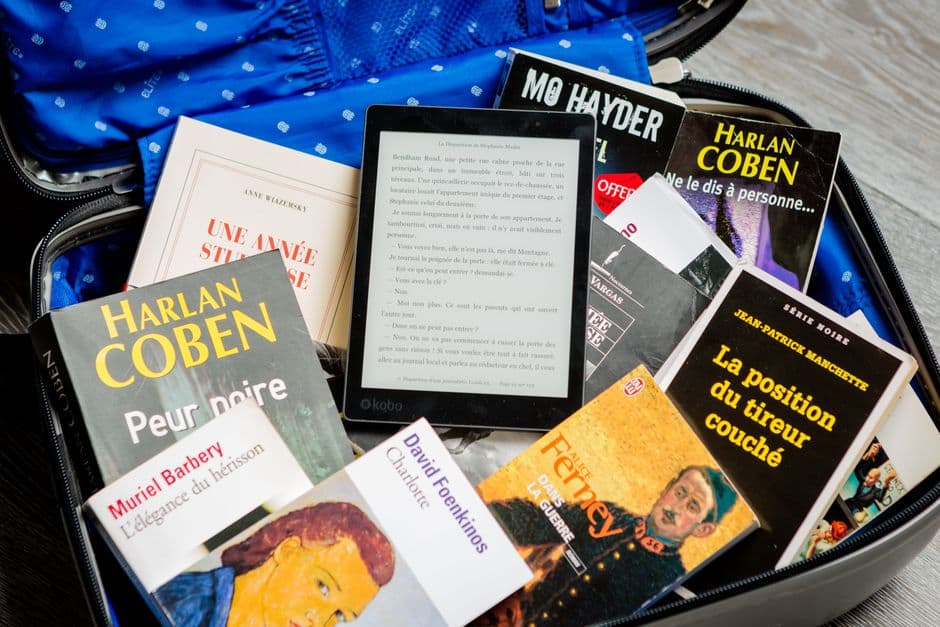
People argue about this as though one format is superior and the other is a compromise. It is a much less interesting question than that. The formats have different physical properties, those properties suit different circumstances, and the useful exercise is matching them to your actual week rather than to an ideal of reading.
Where paper genuinely wins
- Anything you want to keep or display. A shelf is a record of what you have read and a prompt to reread. A digital library is a list nobody sees, including you.
- Lending and giving. Handing someone a book you loved is a real social act with no good digital equivalent.
- Reference and non-linear reading. Flicking back forty pages to check something is instant on paper and fiddly on a screen. Cookbooks, textbooks and anything with diagrams are paper books.
- Reading without a device. If your problem is that you pick up your phone to read and put it down having answered emails, paper solves that completely and nothing else does.
- Secondhand. Charity shops and used bookshops are the cheapest reading in existence, and they are print-only.
Where digital genuinely wins
- Travel. Four hundred books in the weight of one is not a marginal advantage; it is the reason most converts converted.
- Reading in the dark. Beside a sleeping partner, on a night flight, in a hospital corridor. Print requires a light and digital does not.
- Adjustable text. This is the one that turns reading from painful to possible for a large number of people, and it is covered properly on audiobooks and accessibility.
- Volume and cost. Subscriptions and library lending deliver a lot of reading cheaply. Amazon describes Kindle Unlimited as letting you “borrow up to 20 titles at a time… with no due dates”, which has no print equivalent at that convenience.
- Immediacy. Finishing a book at midnight and starting its sequel at midnight is a real feature for series readers.
On the comprehension question
You will find confident claims in both directions. The reasonable summary is that studies have found small advantages for print on some kinds of recall, plausibly linked to physical page position acting as a memory aid, and that the effect is modest. We are not going to quote a percentage, because the studies vary in method and population and picking one to cite would be choosing a number rather than reporting a finding.
What matters far more, for almost everyone, is which format results in reading actually happening. A modest comprehension advantage on a book you did not open is worth nothing. This is the same reasoning applied to the listening question on the benefits of audiobooks.
What this means for a subscription
If you conclude you are mostly a paper reader, do not buy an ebook subscription because it looks like good value. Value is irrelevant if the format does not fit you, and a monthly fee for reading you will not do is the most common way people waste money in this category.
If you conclude the opposite, the relevant question becomes which digital arrangement — borrowing, subscribing or buying — which is on subscribing versus buying, and whether the catalog covers your reading, on how to check what is in the catalog. And if the honest answer is that you read very little in any format and want that to change, the format most likely to fix it is usually audio, because it uses hours you are not currently using at all — see reading versus listening.
Kindle Unlimited terms verified 14 September 2026 against Amazon's help page, Understanding the Kindle Unlimited Subscription and Benefits.
Common questions
Is it better to read ebooks or paper books?
Do you remember less from an ebook?
Are ebooks cheaper?
Can I lend an ebook to a friend?
Do I need a dedicated e-reader?
Sources
Everything on this page that states a program term was checked against these pages on the review date above.
Advertising disclosure · we are paid for this
Ready to start a free trial?
Free trial for eligible customers. Amazon shows the length and the price on the signup page, and the trial converts to a paid month automatically unless you cancel. Terms verified 14 September 2026.
New customers only. 30 days free, then it renews automatically at the monthly rate shown at signup unless you cancel first. Terms verified 17 September 2026.
#ad · The link goes straight to Amazon's Kindle Unlimited signup page and Audible's own free-trial signup page, and we are paid a flat fee if you start a qualifying trial there. It costs you nothing extra and it does not change what we conclude on this page. Full disclosure.
Back to everything on Compare.