How to read more books
Almost nobody reads less because they lack a system. They read less because the book is not to hand at the moments they have, and because finishing a bad one takes weeks.
Advertising disclosure · we are paid for this
New customers only. 30 days free, then it renews automatically at the monthly rate shown at signup unless you cancel first. Terms verified 17 September 2026.
Free trial for eligible customers. Amazon shows the length and the price on the signup page, and the trial converts to a paid month automatically unless you cancel. Terms verified 14 September 2026.
#ad · The link goes straight to Audible's own free-trial signup page and Amazon's Kindle Unlimited signup page, and we are paid a flat fee if you start a qualifying trial there. It costs you nothing extra and it does not change what we conclude on this page. Full disclosure.
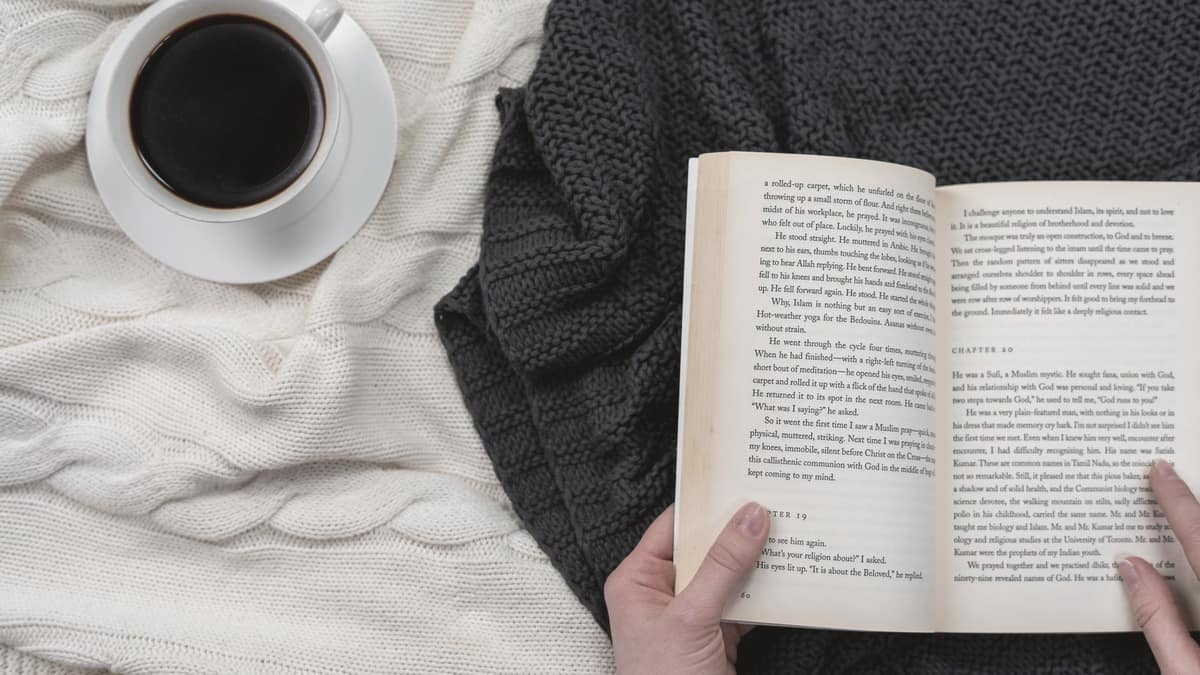
People who read a great deal are rarely doing anything clever. They have removed two specific frictions — the book is always available at the moments they have, and they stop reading books that are not working. Everything else in this category is decoration on those two facts.
Diagnose the actual barrier first
There are three, and they need different answers, which is why generic advice fails so many people.
Access. You want to read but there is nothing to hand you actually want. This is the barrier a library card or a subscription fixes, and the only one either of them fixes.
Time. You have books and no gaps to read them in. This is not solved by buying more books, and it is where audio does its real work, because it converts hours that were never available for reading into hours that are.
Momentum. You are three chapters into something you are not enjoying and have not opened it in two weeks. This is the most common barrier by a distance and costs nothing to fix.
Give yourself permission to abandon
The single largest behavioral difference between people who read a lot and people who do not is how quickly they put a book down. A book you are grinding through does not just fail to entertain you — it occupies the slot, and the slot is the scarce resource. Two months stuck at page ninety is two months of not reading anything.
Fifty pages is a common rule and a good one. If it has not started by then, it is unlikely to, and the book has not wronged you. There is no scoreboard on which unfinished books count against you.
Use the gaps you already have
Almost nobody finds an hour. Almost everybody has four ten-minute gaps: a queue, a commute, a wait, the fifteen minutes before sleep. Forty minutes a day is roughly a book a month at ordinary reading speed, which is more than most people manage while intending to read properly on a weekend.
The condition is that the book has to be there. A phone with a reading app on it removes the excuse entirely, and if that feels like a compromise, it is worth noticing that the alternative in those particular ten minutes is not a hardback — it is a feed.
Audio extends the same idea into hours that were never readable at all. Cooking, cleaning, driving, walking and exercising add up faster than people expect once counted honestly, which is the exercise on listening while you work. Whether that counts as reading is a question worth taking seriously rather than dismissing, and reading versus listening goes through what each format is genuinely better at.
Stop counting titles
A yearly book target is the most popular piece of advice in this category and quietly corrupts your choices. Once a number is at stake, short books beat long ones, easy beats demanding, and finishing beats enjoying. People hit fifty books and read less well than the year they read twenty.
Time is the better measure. Thirty minutes a day is a target you can keep on a bad week and it does not care whether the book is four hundred pages or nine hundred.
Does a subscription actually help?
Only against the access barrier, and only if that is genuinely yours. If your problem is that you finish a book at eleven at night and have nothing queued, then yes — instant availability removes a real gap, and that is what these services are for. If your problem is time or momentum, a subscription adds a monthly charge to an unchanged reading habit, and three months later you cancel it.
The free version of the same fix is a library card, which removes the access barrier at no cost. How to borrow from your library is the setup, and for a lot of readers that is the end of the problem. We earn nothing from it and it is still the first thing to try.
Where a paid subscription genuinely wins is impatience: no holds, no queue, the next book available immediately. If you know that about yourself, the arithmetic is on whether Kindle Unlimited is worth it and whether Audible is worth it, both of which come out negative for a fair number of people and say so.
Advertising disclosure · we are paid for this
We get a flat fee if you start a qualifying trial through this link. It costs you nothing extra, it does not change what we conclude on this page, and the full disclosure is here.
If access is genuinely the thing stopping you
Try the library first — it fixes the same problem for nothing. If holds and waiting are the specific friction, a trial is the honest way to test whether always-available reading changes your actual total. What we could verify about the terms, and what we could not, is on the Kindle Unlimited trial page.
Free trial for eligible customers. Amazon shows the length and the price on the signup page, and the trial converts to a paid month automatically unless you cancel. Terms verified 14 September 2026.
#ad · The button goes straight to Amazon's Kindle Unlimited signup page. The offer you see there is whatever Amazon is running at the moment you click, which is why we send you to look rather than printing a number that could be out of date. What we checked, and when, is on how we research.
Common questions
How do people who read a lot actually do it?
Do audiobooks count as reading?
Will a subscription make me read more?
How many books a year is a lot?
Should I finish books I am not enjoying?
Sources
Everything on this page that states a program term was checked against these pages on the review date above.
Advertising disclosure · we are paid for this
Ready to start a free trial?
New customers only. 30 days free, then it renews automatically at the monthly rate shown at signup unless you cancel first. Terms verified 17 September 2026.
Free trial for eligible customers. Amazon shows the length and the price on the signup page, and the trial converts to a paid month automatically unless you cancel. Terms verified 14 September 2026.
#ad · The link goes straight to Audible's own free-trial signup page and Amazon's Kindle Unlimited signup page, and we are paid a flat fee if you start a qualifying trial there. It costs you nothing extra and it does not change what we conclude on this page. Full disclosure.
Back to everything on Guides.